Introduction
Edge AI in 2026 Artificial Intelligence is among the fast-evolving technologies that significantly influence modern business. Currently, artificial intelligence is applied in many fields such as customer services, content creation, marketing, data processing, automation, and decision-making processes. However, the traditional models of AI require cloud computing because the analysis process involves data transmission from the device to cloud servers.
Edge AI is different from traditional models of AI.
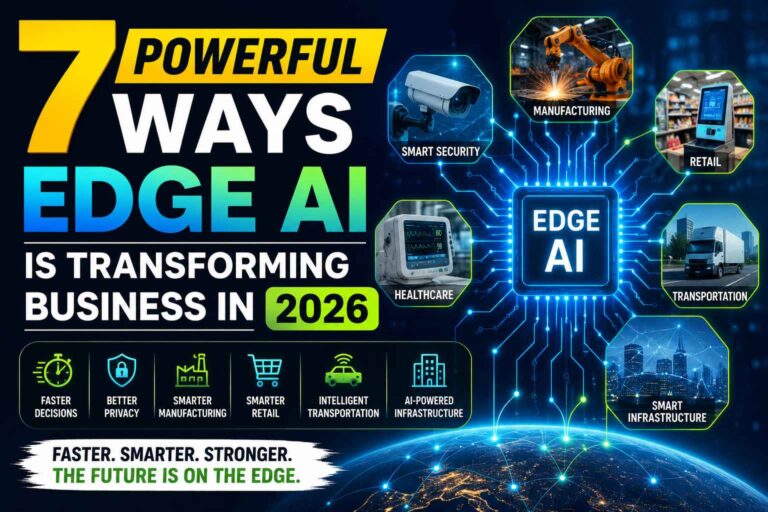
Edge AI in 2026 In contrast to the traditional AI model where it is necessary to send data to the cloud server for further processing, the edge AI technology allows analyzing data right where it is processed such as mobile devices, security cameras, industrial machinery, cars, medical equipment, retail systems, and others.
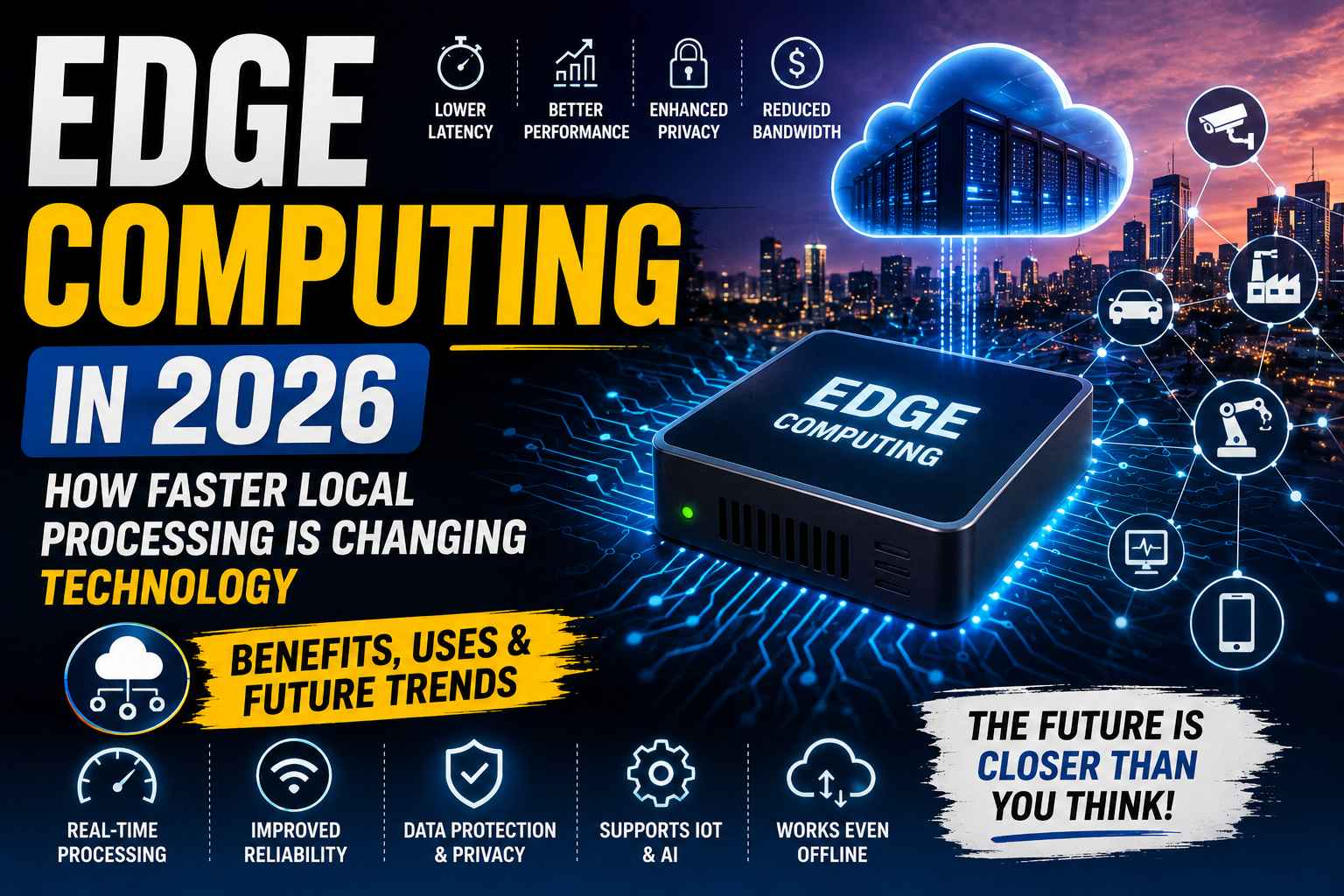
The advantages of edge AI are fast reaction, decreased dependence on internet connectivity, privacy preservation, and economy of data transfer.
Speaking about the interests of companies in technologies that will combine AI and the activity of the company, it should be noted that in addition to the prospects provided by artificial intelligence, cloud AI, RAG, AI regulation, and business automation, InsightEra provides information about. (InsightEra)
The article is focused on seven main applications of edge AI, pros and cons, use cases, implementation barriers, and other issues related to businesses. https://insightera.co/
What Is Edge AI?
Edge AI is the term used for AI that runs directly on the device collecting data or very close to it.
The sequence of actions typical for the cloud AI is the following one:
Device → Internet → Cloud → AI Processing → Output → Device
Edge AI in 2026 will enable making the sequence shorter:
Device → Local AI Processing → Output
For example, take an industrial camera analyzing the production line.
Edge AI in 2026 In the situation when cloud technology is applied, the video stream is sent to some remote server for the processing. Using Edge AI, the video stream will be analyzed by an AI model that resides either on the camera itself or an industrial computer, and the detection of the production defect takes place.
It could become particularly useful in the cases when quick decision-making is required.
Edge AI in 2026 One has to keep in mind that the edge AI technology doesn’t mean the refusal from the cloud computing solutions at all. On the contrary, sometimes both technologies are used simultaneously in the course of practical application. The edge devices do instant processing, while the cloud does large data processing, analytics, retraining and managing models.
Best AI Tools for Business in 2026
The whole picture is rather evident:
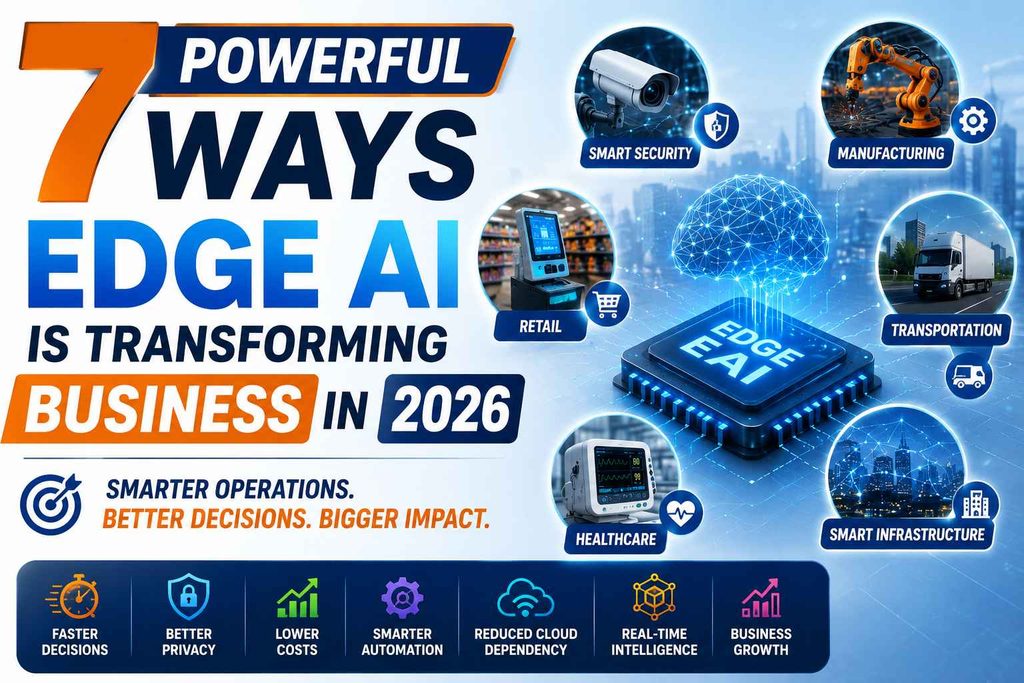
Place AI close to the data.https://www.nvidia.com/en-us/edge-computing/
Pros and Cons of Edge AI
Pros:
- Faster AI responses
- Latency reduction
- Reduction in cloud dependency
- Data-transfer requirements could be reduced
- Local computing
- Good for real-time processes
- Applicable in low connectivity or offline situations
- High applicability in manufacturing and transport sectors
- Creates intelligent connected devices
- Can work alongside cloud AI
Cons:
- Hardware can raise deployment costs
- Controlling numerous pieces of hardware can be a challenge
- Edge hardware has limited computing power
- Security becomes an issue for many endpoints
- AI model updates can prove to be tricky
- Hardware malfunction can influence local AI operation
- Model performance might differ from one hardware piece to another
- Integration with other technologies can be hard
- Qualified technical teams can be needed
- Low quality data can create low quality AI
- The greatest mistake companies can do is thinking that Edge AI will solve all their problems automatically.
- It won’t.
- Edge AI has its own architecture and this architecture has its own challenges.
Edge AI vs Cloud AI
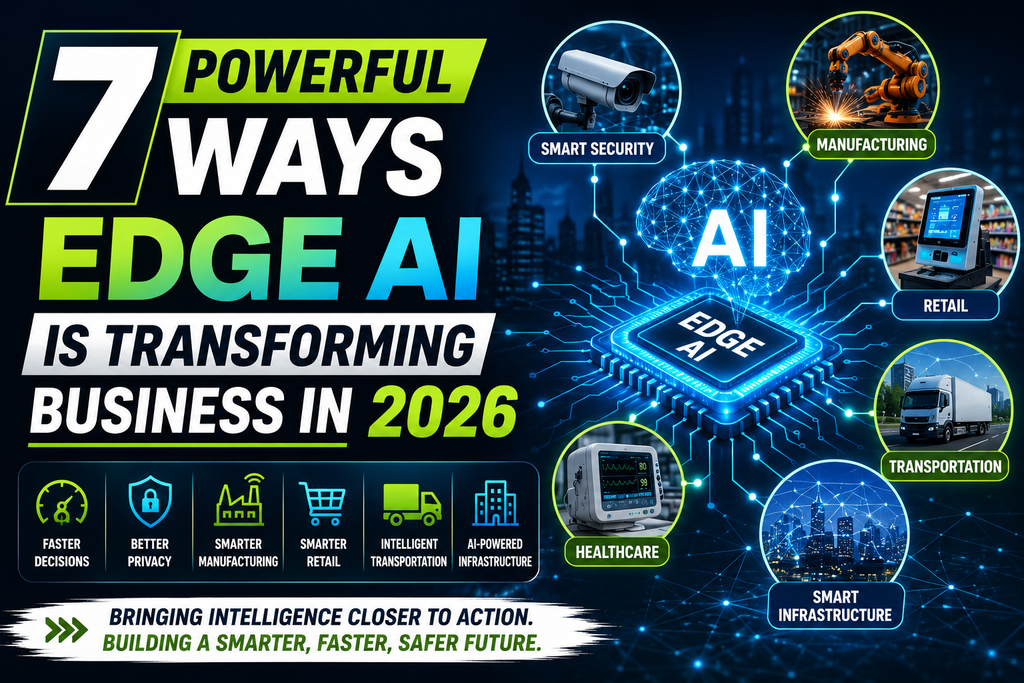
- Which is better: Edge AI or Cloud AI?
- Generally, neither alone.
- It all depends on the business use case.
- Edge AI is typically valuable when:
- Quick decisions are needed
- Internet access is not always available
- Data is produced constantly
- Privacy is critical locally
- Devices need to run autonomously
- Cloud AI is typically valuable when:
- Massive computing power is necessary
- Organizations want to perform analytics centrally
- Model training requires substantial computing resources
- Massive data storage is necessary for organizations
- Several locations require centralized management
- Hybrid AI
- Many businesses will find a mix of both useful.
For instance:
Edge: Process sensor data and spot immediate problems.
Cloud: Store historical data, retrain models, generate reports, and perform analysis across several locations.
How Businesses Can Start With Edge AI
The business does not need to overhaul its entire business in one night.
A smarter way is to start with an actual problem.
Step 1: Locate an Actual Problem
Identify an operational problem where faster AI processing will actually make a difference.
Step 2: Select One Use Case
Begin by focusing on just one machine, facility, vehicle, camera, process etc.
Step 3: Consider What Data Is Available
See what data you have and how many more sensors you will need.
Step 4: Choose the Appropriate Hardware
Choose hardware depending on your AI algorithm, workload, environment and power needs.
Step 5: Run Your Model
Try out the AI solution in the lab first before widespread deployment.
Step 6: Evaluate Performance
Monitor performance measures like response time, downtime, operating costs, accuracy or productivity.
Step 7: Expand Carefully
Do not roll out to wide deployment until you have proved the solution works well.
This will avoid wasteful investment in technology without a business case.
Final Thoughts
The emergence of Edge AI represents a huge improvement for those organizations that have embraced artificial intelligence.
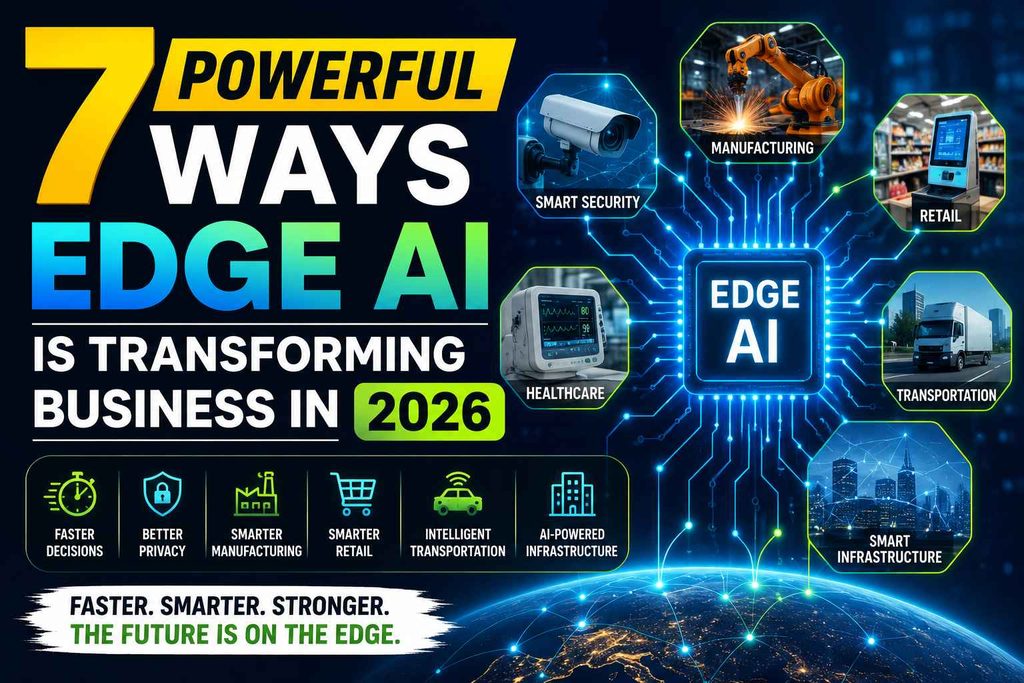
While the emergence of cloud AI brought great computing power to organizations all over the world, Edge AI brings something new – it allows bringing intelligence closer to the physical location of the data production.
Whether it comes to manufacturing equipment, or retail stores, whether it comes to vehicles, buildings, energy, infrastructure, Edge AI makes organizations think and act smarter and quicker.
Among the advantages of this new type of AI we can single out such features as low latency, local computing, limited dependency on cloud AI, and the ability to deploy real-time applications.
But just because Edge AI represents one of the trending technologies today, it doesn’t mean that every company should embrace this innovation without any delay.
In this case the main question to ask would be:
“What business problem will local AI solve better than the current system?”
If it involves quicker decision making, real-time monitoring, unreliable Internet connectivity, large amount of local data, or the necessity to analyze the data locally, then Edge AI may be helpful.
The best way to proceed would be piloting the technology, analyzing the results, optimizing the solution, and gradually rolling out it to a greater extent.
In 2026, AI becomes more than a simple chatbot or content generator.
It leaves the clouds and starts going into machines, devices, cars, factories, buildings, infrastructure, and everything else.
Table of Contents