Introduction
Digital Twins
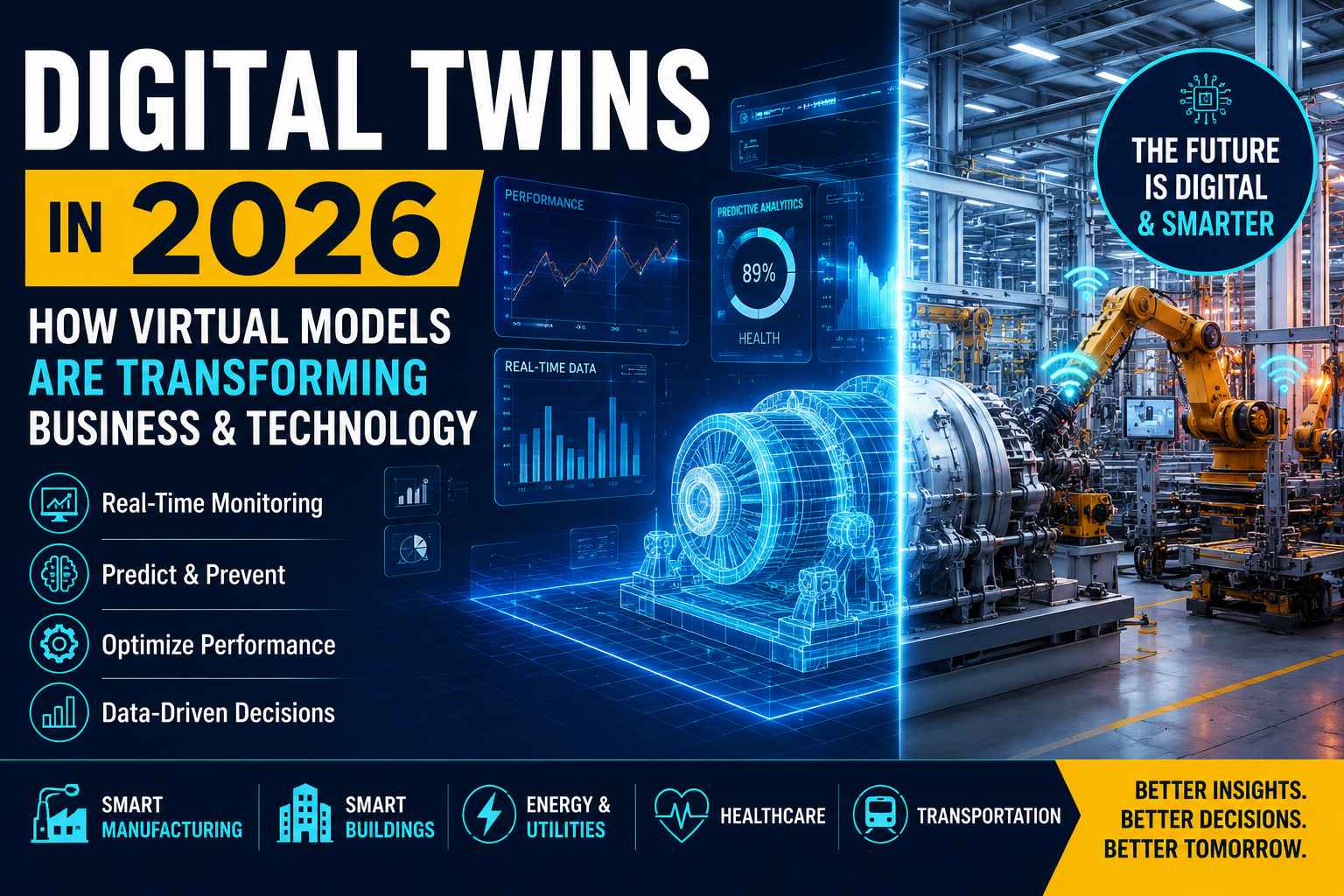
The emergence of Digital Twins Technology revolutionizes the way product development, facility management, infrastructure control, and decision-making are performed by business organizations. One of the crucial technologies that allow to bring about the revolution is the digital twin itself.
What is a digital twin?
A digital twin is the digital representation of an existing object, system, process, or environment. While the traditional digital model represents the look or the operation of an object, a digital twin may be integrated into real-world data and changed according to the changes in the real-world system. Thus, a digital twin allows for monitoring, simulation, prediction, and testing of potential solutions before they are implemented in the real world.
The importance of this concept comes into sight when companies apply such complex technologies as IoT, sensors, artificial intelligence, cloud computing, data analysis, and simulations. According to NIST, digital twins can assist in monitoring, diagnosing, predicting, optimizing and decision-making during the entire lifecycle of the physical systems. (NIST)
By 2026, digital twins become a mature technology. The companies use digital twins for studying the nature of their equipment and manufacturing processes, while building and infrastructure researchers experiment with digital twins for energy management, structural monitoring, and intelligent operations.
Still, digital twins do not solve all problems. The application of digital twins technology presupposes high-quality data, proper modeling, integrations, cybersecurity, and maintenance.
In this article, we discuss digital twins, their working principles, applications, advantages and disadvantages, and share the insights that businesses should know about digital twins..AI tools for business
What Is a Digital Twin?
Digital twin means digital replica of the physical item, in simple language.
Physical item may be any of the following:
- Manufacturing machine
- Engine of the airplane
- Building
- Vehicle
- Factory
- Energy systems
- Supply chain management process
- City infrastructure system
- Medical equipment
- Industrial process
According to NIST, digital twin is “digital representation of a physical object or system” or its “virtual representation of a real-world entity, concept, or idea.” In other words, digital twin is the reflection of the state or behavior of the specific item. (NIST Computer Security Resource Center)
For instance, consider a factory, which has installed an industrial machine with temperature, vibration, pressure and energy sensors attached to it. Instead of taking information of each sensor separately, all these data can be considered while creating digital twin of the machine.
If the machine is not working within its normal parameter range, then digital twin can help the engineer in knowing the fault area. In some cases, digital twins make use of historical as well as current data to predict the future incidents.
This alters the nature of the data.
Instead of just asking:
“What is happening?”
Digital twin allows the organization to ask:
“Why it is happening, what may happen in future and what action we must take?”
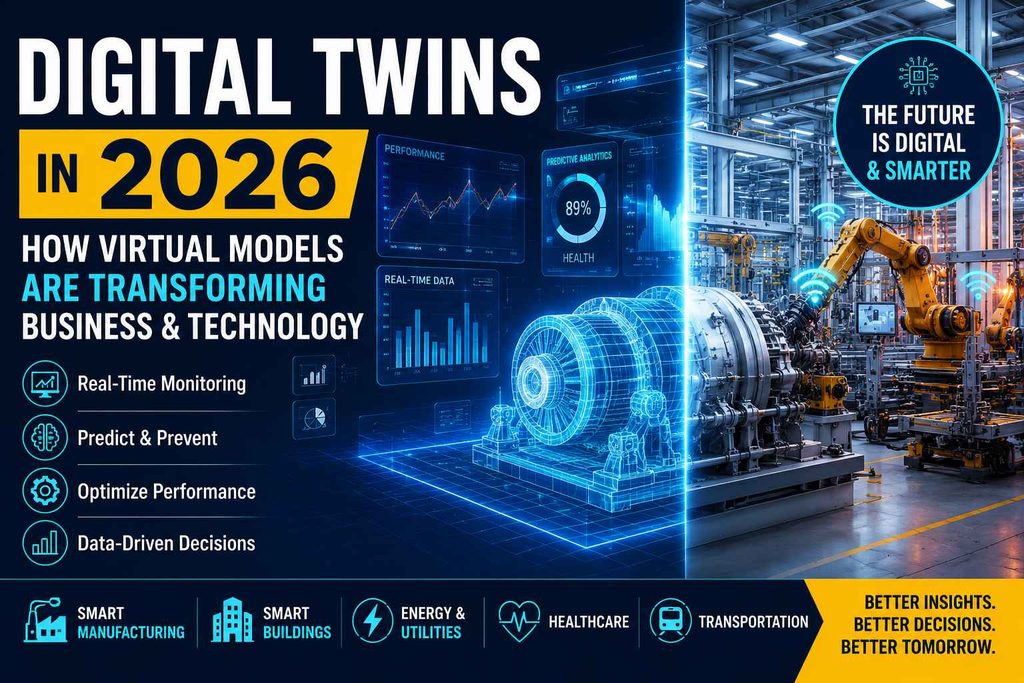
Digital Twins vs Traditional Simulation
Digital twins and simulations share some similarities, although they are not entirely the same thing.
A traditional simulation may be generated in order to analyze certain conditions. For instance, an engineer can create a simulation of how the machine works in certain conditions(NIST).
The digital twin can add additional value by staying connected to the physical system and using actual data for analysis.
In other words, the simulation can address questions like:
“What might occur in these conditions?”
while the digital twin can answer such questions as:
“What is occurring right now, what is going to happen next, and what would happen if we change something?”
This difference depends on how the digital twin is implemented. All digital twins are not the same and don’t have all features listed above. As NIST states, there still lacks a generally accepted definition of digital twin technology.(NIST) https://www.nist.gov/digital-twins
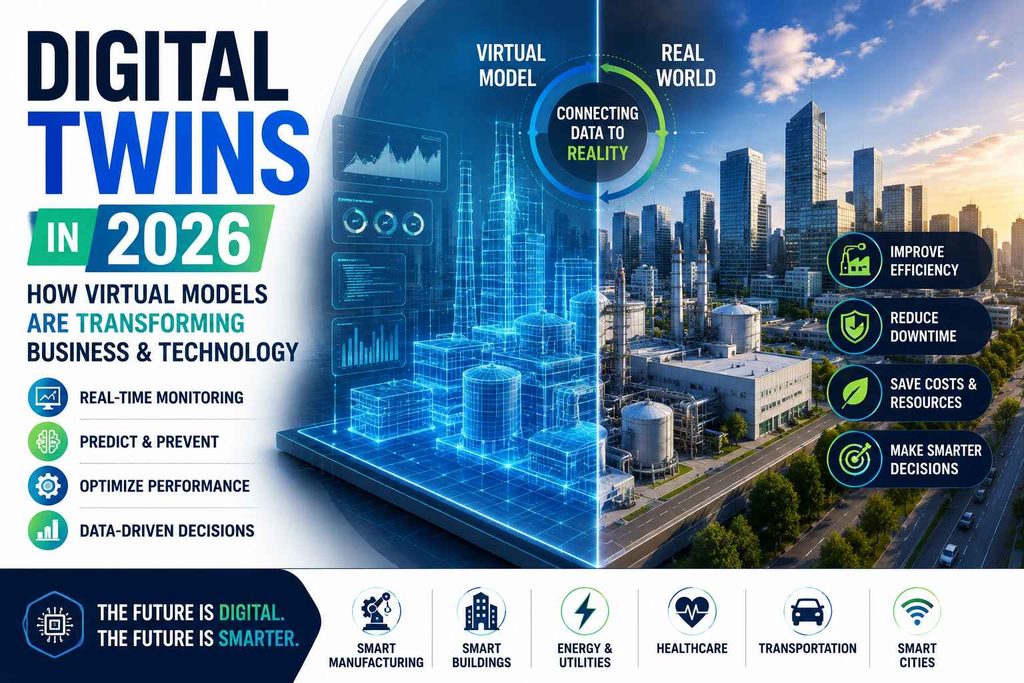
Pros and Cons of Digital Twins
Pros:
- Greater insight into complicated systems
- Data-driven decision-making
- Opportunities for predictive maintenance
- Quicker scenario simulation
- Potentially less downtime
- Enhanced product development
- Efficient resource and energy use
Helps with lifecycle management
- Increased safety for experiments
- Great compatibility with IoT and AI
Cons:
- Expensive at the start
- Complex integration of systems
- Reliable data sources required
- Security problems
- Compatibility problems with other platforms
- Needs maintenance
- Models become unreliable if not updated
- Technical expertise may be needed
- Not all businesses have enough data for a twin
- Misleading results from poorly made models
- This one is especially significant. (NIST)
- A digital twin is as valuable as its data, model, assumptions, and verification process.
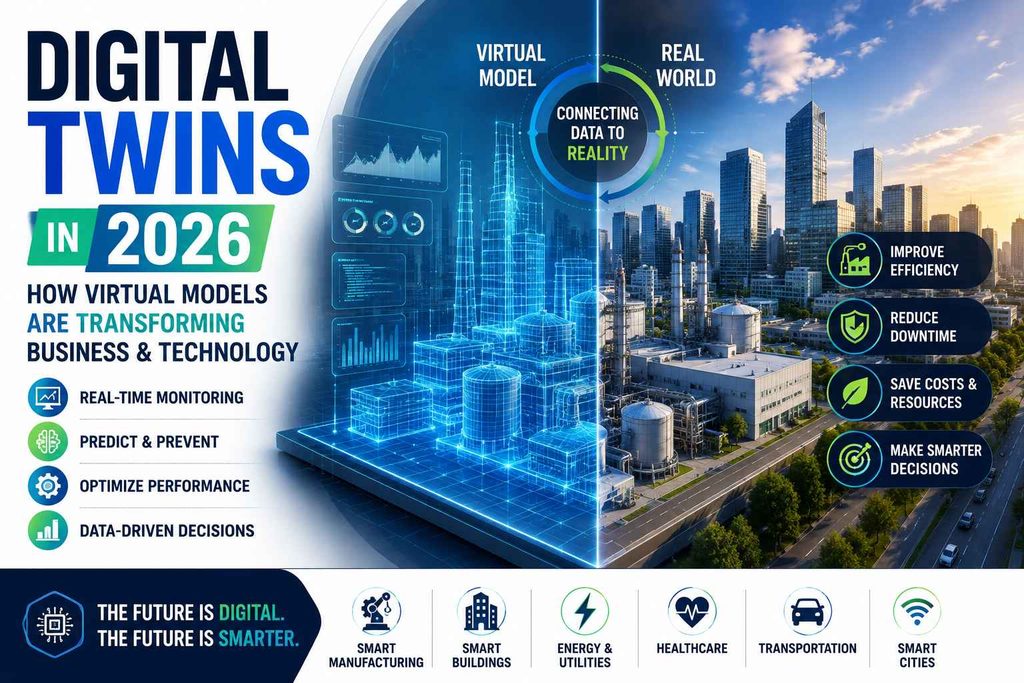
Final Thoughts
Digital twins are a significant step forward in organizations’ interaction with physical systems.
No longer limited to observation of machines, buildings, cars, or infrastructure, organizations can use digital counterparts of objects to gain insights about existing states, consider different scenarios, predict future results, and improve their decision-making processes.
Moreover, this technology is promising due to its ability to combine multiple technology trends – IoT, artificial intelligence, cloud computing, data analytics, simulation, and automation.
As of today, manufacturing is one of the industries with the highest rate of digital twin adoption; however, other sectors such as buildings, energy, transportation, healthcare, and infrastructure are developing in this direction. The next stages of advancement, according to current research, will require interoperability, validation, security, and proper integration of systems. (NIST)
Nonetheless, companies must avoid implementing digital twins solely based on the idea of the technology being a modern trend.
A good digital twin must be solving some problem and providing useful information for better decision-making and gaining measurable value from it.
Companies that will benefit the most from the implementation of digital twins are those that start their implementation process with clearly defined objectives, reliable data, appropriate modeling, security, and realistic plan.
In 2026 and further, the biggest value may not lie in creating perfect virtual copies of all the existing things but in creating focused digital systems that allow individuals to get better understanding of environment and make wise decisions in order to avoid future problems.
This is the reason why digital twins can be more than just technology buzzwords.
Table of Contents